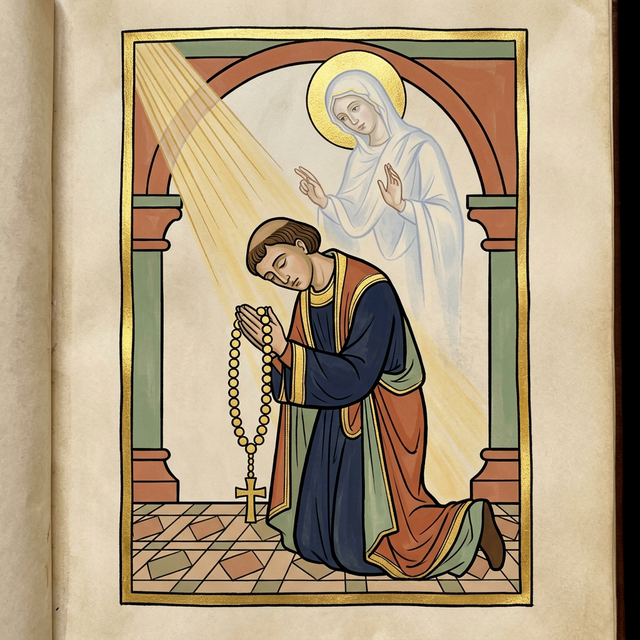
In the venerable annals of Christendom, where the lives of saints shine forth as beacons of God's grace, we often find the most brilliant light emanating not from thrones or cathedrals, but from the most humble corners of existence. Such is the radiant story of Saint Zita of Lucca, a simple maidservant whose profound holiness transformed her ordinary tasks into a pathway to eternal glory. Her life, though lived eight centuries ago, resonates with timeless truth, demonstrating that sanctity is not reserved for the privileged or the powerful, but is a divine invitation extended to every soul, regardless of station.
A Life of Unwavering Service and Profound Piety
Born in 1212 in Monsagrati, a small village near the bustling city of Lucca in Tuscany, Zita entered the world amidst the quiet dignity of a peasant family. At the tender age of twelve, she was sent to serve in the household of the wealthy Fatinelli family in Lucca, a common practice for girls of her time. For the next forty-eight years, until her death in 1272, Zita’s life was an unbroken tapestry of diligent service, quiet prayer, and heroic virtue.
Her daily routine was one of relentless labor: cleaning, cooking, sewing, and attending to the myriad needs of a large household. Yet, for Zita, her scullery was her cloister, her daily chores her sacred liturgy. She rose before dawn to assist at Mass, and throughout her long days, her heart remained continually united with God in prayer. This profound piety, combined with her unwavering diligence and humble demeanor, often drew the ire of her fellow servants. They, perhaps out of envy or misunderstanding, mocked her devotion, slandered her to her employers, and often subjected her to harsh treatment.
Heroic Virtues Forged in Daily Toil
Amidst these trials, Zita exemplified heroic virtue. Her response to malice was always patience; to insults, silence; to injustice, forgiveness. She never complained nor retaliated, instead offering her sufferings to God. This Christ-like forbearance eventually disarmed her tormentors and earned her the profound respect and affection of the Fatinelli family.
-
Humility and Patience: Zita never sought recognition for her tireless work or her profound holiness. She served selflessly, considering herself the least of all, accepting every burden with grace.
-
Charity: Her heart burned with an ardent love for the poor. Despite her meager wages and difficult circumstances, she consistently shared her own food and clothing with those less fortunate, often bringing them portions from the Fatinelli household, knowing well that God's Providence would make up for any perceived deficit.
“The greatest love is to lay down one's life for one's friends, and the greatest act of charity is to love God perfectly.” — St. Thomas Aquinas
Indeed, Zita's life was a continuous act of laying down her life, motivated by that perfect love for God, manifest in her boundless charity towards His children.
-
Obedience and Diligence: She saw her service to the Fatinelli family as direct service to God Himself. Every task, no matter how menial – from sweeping floors to preparing meals – was performed with utmost care, precision, and a pure intention to please God.
Miracles: Divine Affirmation of a Simple Soul
God frequently confirmed Zita's extraordinary virtue with miraculous interventions. One famous account recounts a bitter winter morning when Zita, having given away the family's beans to a starving family, was confronted by her master, who demanded to see what was in her apron. With a fervent prayer, Zita opened her apron, and instead of beans, it was filled with fresh flowers and fragrant leaves, a vibrant testament to divine approval even in the depths of winter. This silenced her accusers and deepened the family's reverence for her.
Another beloved legend tells of Zita being called away from her bread-making duties to attend to a urgent need. Upon her return, she found the dough miraculously kneaded and ready for baking, an angelic helper having completed her task. These miracles, far from being mere tales, are powerful attestations of God's direct intervention for those who love Him wholeheartedly and serve Him in humility.
Her Enduring Legacy and Feast Day
St. Zita died peacefully on April 27, 1272, having lived a life of extraordinary holiness in the most ordinary circumstances. Her passing was accompanied by a star appearing over her attic room, witnessed by many in Lucca. So great was her reputation for sanctity that pilgrims immediately began to venerate her. She was canonized in 1696 by Pope Innocent XII, and her incorrupt body rests to this day in the Basilica of San Frediano in Lucca, a perpetual reminder of her purity and God's favor.
St. Zita is venerated as the patroness of domestic workers, maids, housekeepers, and lost keys. Her feast day is celebrated annually on April 27th, a day to remember the dignity of labor and the sanctity available to all.
Relevance for the Modern Soul: Sanctifying Our Daily Bread
In an age often preoccupied with seeking grand callings and dramatic achievements, St. Zita's life offers profound lessons for the modern Catholic:
-
The Dignity of Work: St. Zita reminds us that all honest labor, performed with love for God and a spirit of service, possesses immense spiritual dignity. No task is too small or too menial to be offered to God and thereby attain eternal value.
-
Sanctity in the Ordinary: For the vast majority of us, holiness is found not in dramatic events or cloistered contemplation, but in the consistent, loving performance of our daily duties – whether raising children, working in an office, caring for a home, or serving in any capacity. Our homes and workplaces can truly become launchpads for sanctity.
-
Trust in Divine Providence: Her miracles and unwavering faith encourage us to trust in God's paternal care, even when resources seem scarce or circumstances challenging. God always provides for those who serve Him faithfully.
-
Patience and Forgiveness: Zita’s example in enduring slander and hardship with serene patience is a powerful lesson for navigating interpersonal conflicts and injustices with true Christian charity.
A Call to Deeper Formation
As faithful Catholics striving for daily formation through Sanctus Mission, let us take profound inspiration from St. Zita of Lucca. She shows us that heaven is opened not by extraordinary deeds alone, but by extraordinary fidelity in ordinary moments. Let us consecrate every moment, every task, every interaction to the Divine Will, transforming our homes and workplaces into temples of God's presence. May our daily bread of toil become a feast for our souls, leading us ever closer to Christ, our ultimate Beloved.