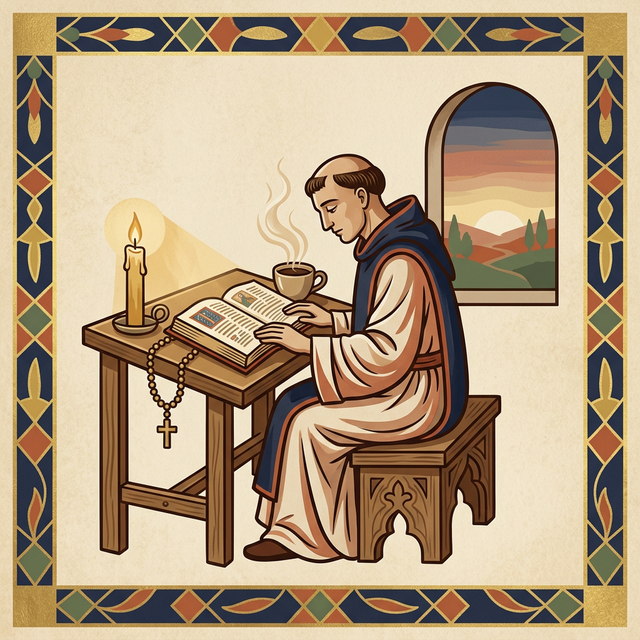
People often ask: "Do the monks really roast the coffee?" Yes. Here's what a typical day looks like for Brother Thomas, one of six monks who rotate through the roastary.
The Daily Horarium (Schedule)
4:30 AM — Vigils
The day begins in darkness. The monks process to the chapel for the Night Office — psalms, readings, and silent meditation. No lights except candles. The chapel is cold. This is the most contemplative hour, when the world is still and the soul is closest to God.
6:00 AM — Lauds (Morning Prayer)
The sun is rising. Lauds is the Church's morning praise — psalms of gratitude, the Benedictus, and intercessions for the day ahead. After Lauds, the monks gather briefly for coffee in the refectory. This is their first earthly sustenance.
7:00 AM — Mass
The Eucharist is the summit of the monastic day. Everything before it points toward this moment; everything after flows from it.
8:00 AM — Breakfast and Lectio Divina
A simple breakfast — bread, fruit, more coffee — followed by 45 minutes of sacred reading. Brother Thomas often reads from the Church Fathers during this period: St. John Chrysostom, St. Augustine, or the Desert Fathers.
9:00 AM — Work Period (Roasting)
This is when the roaster fires up. Brother Thomas checks the day's orders, selects the beans, and begins the first batch. A typical morning produces 3-4 batches of 25-30 pounds each.
The roastary is a converted barn about 200 feet from the chapel. The proximity is intentional — the monks can hear the chapel bells calling them to prayer, even mid-roast. If a batch is in a critical phase, a second monk takes over while the first goes to pray.
11:45 AM — Sext (Midday Prayer)
A brief office — three psalms and a reading. The monks pause, re-center, and return to work. Brother Thomas uses this break to label and bag the morning's roasts.
12:00 PM — Dinner (Main Meal)
The primary meal of the day, eaten in silence while one monk reads aloud from a spiritual text. The food is simple: soup, bread, vegetables from the monastery garden, occasionally meat.
1:30 PM — Work Period (Packing and Shipping)
Afternoon work focuses on packaging, labeling, and preparing shipments. Quality control happens here — every bag is weighed, sealed, and inspected.
3:00 PM — None (Afternoon Prayer)
Another brief office. By this point, most coffee orders for the day are packaged and ready for pickup by the carrier.
5:00 PM — Vespers (Evening Prayer)
The most solemn evening office. Incense, the Magnificat, and psalms of the evening. The day's work is formally offered to God.
6:00 PM — Supper
A lighter meal — usually the day's leftovers, bread, and tea.
7:30 PM — Compline (Night Prayer)
The final office. The Salve Regina is chanted. The Great Silence begins — no speaking until after Lauds the next morning. Brother Thomas returns to his cell for reading or sleep.
The Rhythm of Prayer and Work
Notice the pattern: work never exceeds 3 hours without interruption by prayer. This is Benedict's genius. The bells pull you out of productivity-mode and back into God's presence. Then you return to work renewed.
When Brother Thomas roasts a batch of St. Benedict Dark French Roast, he's doing so within a framework of prayer that began at 4:30 AM and will end at 7:30 PM. That's not marketing. That's the actual structure of his day.