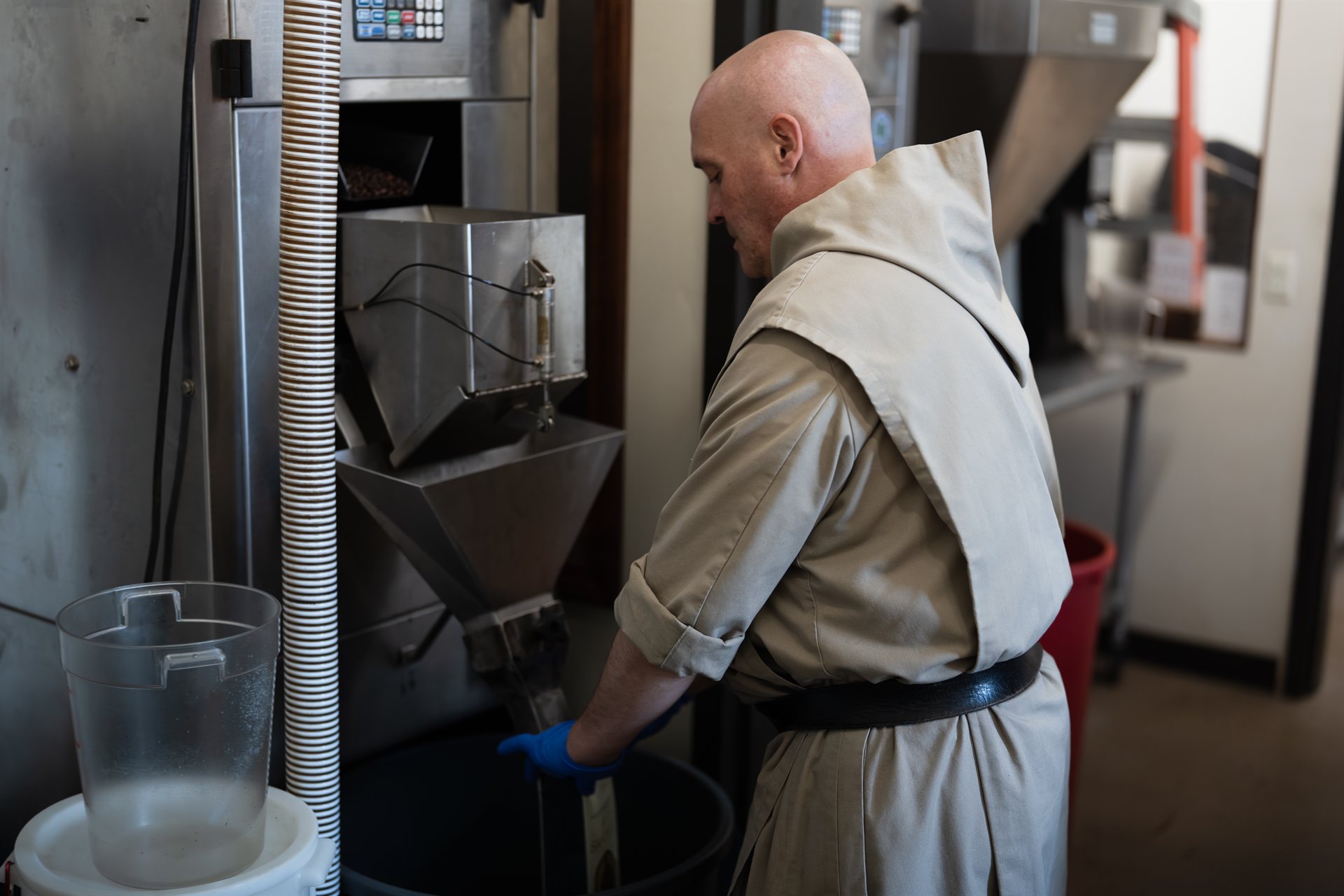
For more than fifteen centuries, the Rule of St. Benedict has guided monastic communities in balancing the spiritual life with practical manual labor. At the heart of this ancient wisdom is a simple Latin motto: Ora et Labora — Pray and Work.
To St. Benedict, manual work was never an unfortunate distraction from prayer. It was an essential pillar of Christian discipline. Monks were instructed to work with their hands not only to sustain their community, but to cultivate humility, quiet the mind, and sanctify the ordinary moments of everyday life.
Manual Labor as Monastic Craft
In Benedictine monasteries, labor takes many traditional forms: breadmaking, woodworking, gardening, bookbinding, and coffee roasting. When monks roast coffee, they do not treat the coffee bean as a magical or devotional object. Rather, they approach roasting as honest, disciplined manual trade.
Coffee roasting requires constant attention to detail: observing temperature curves, listening for the distinct first crack, and evaluating aroma development in small 20-to-40-pound batches. This careful focus fits naturally into the contemplative rhythm of monastic life.
The Monastic Relationship Behind Sanctus Coffee
Sanctus Coffee works directly in relationship with Benedictine monks who hand-roast our single-origin specialty Arabica beans. This partnership allows traditional monastic craft to flourish while delivering fresh, small-batch roasts directly to faithful households across the country.
If you would like to explore our monastic story, visit our Monastic Story page. You can also explore St. Benedict Dark French Roast, inspired by the father of Western monasticism, or learn more about the devotion and history behind the St. Benedict Medal.